
12 Best Entryway Storage Ideas That Look Polished
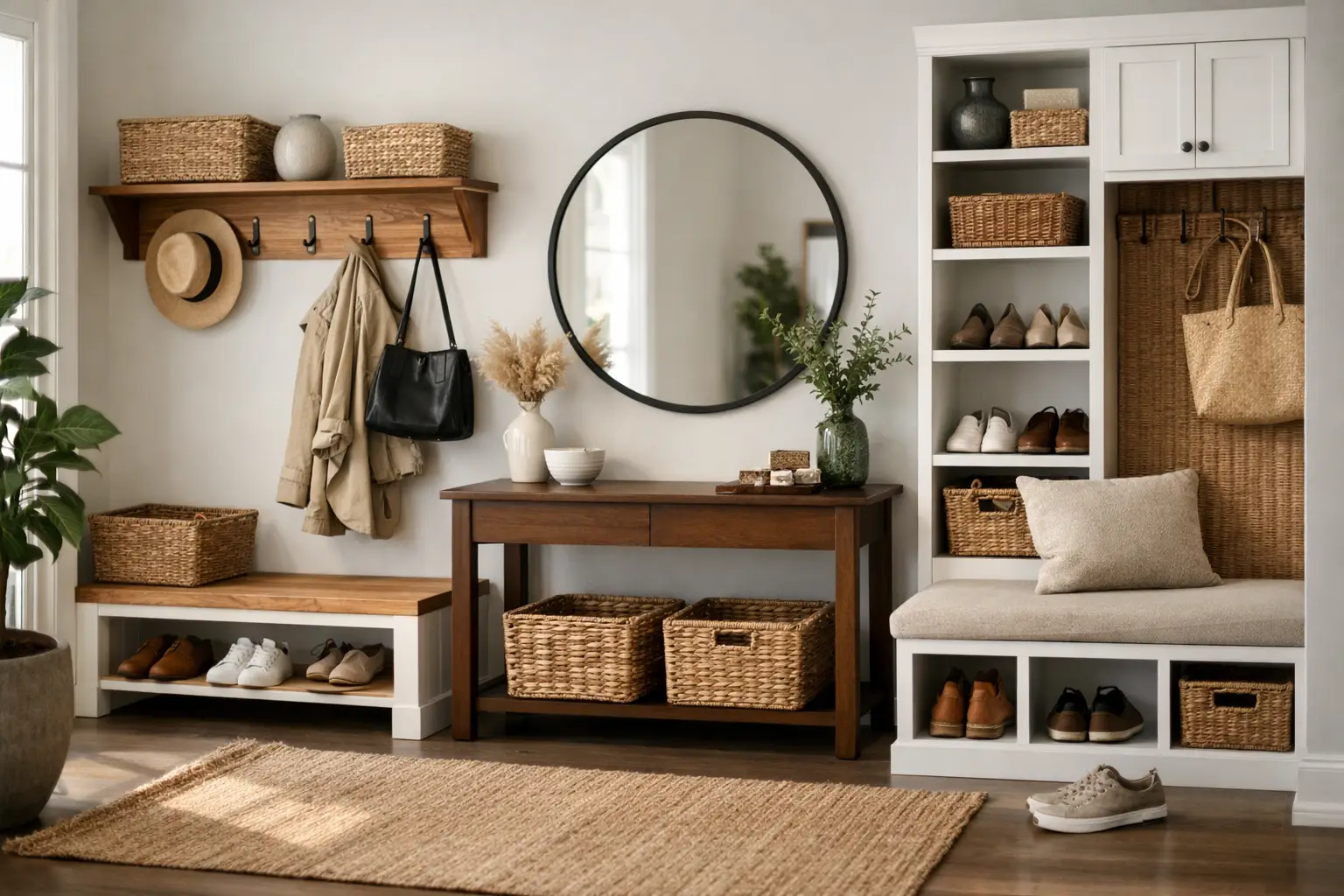
The best entryway storage ideas do more than hide shoes and hang coats. They set the tone for the home before anyone reaches the living room, turning the daily rush of keys, bags, packages, and outerwear into a composed welcome. Whether you have a grand foyer, a narrow apartment hall, or only a few feet beside the front door, the right pieces can make that space feel intentional rather than overworked.
Start With the Entryway You Actually Have
A beautiful entryway is not necessarily a large one. It is one that gives every arriving item a clear destination. Before choosing furniture, notice how your household moves through the door. Do shoes come off immediately? Are backpacks dropped at the first available chair? Does the dog leash disappear when it is needed most?
That pattern should shape the storage plan. A household with young children may need low cubbies and a bench. A city apartment may benefit more from wall-mounted storage and a slim cabinet. The most refined solutions feel tailored to real life, not staged for a photo.
12 Best Entryway Storage Ideas for a More Collected Home
1. Choose a Slim Console With Concealed Storage
A slim console table creates an instant sense of arrival without taking over a narrow hall. Select one with drawers or closed compartments to keep sunglasses, mail, charging cables, and spare keys out of sight. The surface remains available for a sculptural lamp, a tray, or a simple vase, so function never comes at the expense of presentation.
Open-leg consoles keep a small entryway visually light, while a cabinet-style version offers a more substantial, furniture-forward look. Measure the walk path first. A console that is too deep can make an entry feel crowded, no matter how beautiful it is.
2. Add a Storage Bench That Earns Its Footprint
A bench is one of the most useful entryway investments because it offers a place to sit while putting on shoes and a place to store what would otherwise collect on the floor. Lift-top benches conceal seasonal accessories, while designs with drawers make everyday items easier to reach.
For a more tailored result, choose upholstery that complements the adjacent room or a wood finish that echoes your flooring. In a busy family home, performance fabric or a wipeable surface is a practical luxury.
3. Build a Shoe Zone Instead of a Shoe Pile
Shoes are often the first source of visual clutter. A dedicated shoe cabinet, low cubby unit, or lidded baskets beneath a bench turns that daily reality into a controlled system. Closed cabinets are ideal when you prefer a clean, gallery-like entry. Open shelves work well for households that need fast access and stronger airflow.
Consider limiting each person to the pairs they wear most often. Out-of-season footwear belongs elsewhere, leaving the entryway reserved for the shoes that support the current week.
4. Use Wall Hooks at the Right Height
A row of hooks can replace a bulky coat rack and use vertical space with far more elegance. Install a second, lower row for children, guests, or dog-walking essentials. This simple adjustment makes the system easier to maintain because everyone can reach their own belongings.
The trade-off is visual. Hooks can look messy if every coat, tote, and baseball cap stays out year-round. Pair them with a nearby cabinet or basket so only the items in current rotation remain visible.
5. Create a Landing Pad for Keys and Small Essentials
The smallest objects create the biggest exit-time frustration. A shallow drawer, ceramic catchall, or divided tray provides a polished home for keys, earbuds, access cards, and sunglasses. Position it near the door, not across the room, so the habit feels effortless.
If mail routinely enters with you, use a vertical sorter or one lidded box for pieces that need attention. The goal is not to turn the entryway into an office. It is to prevent the kitchen counter from becoming one.
6. Make a Tall Cabinet Work Harder
When floor space is limited, a tall storage cabinet offers an impressive amount of organization in a narrow footprint. It can hold umbrellas, reusable shopping bags, pet supplies, cleaning tools, and even a few pairs of boots. A closed cabinet is especially valuable in open-plan homes, where the front door may be visible from the main living area.
Look for adjustable shelves so the interior can evolve with your needs. A tall piece should feel grounded rather than imposing, so choose a finish that either blends with the wall or adds deliberate contrast.
7. Use Baskets for Soft, Flexible Storage
Woven baskets bring warmth to hard-working storage. They are ideal for scarves, gloves, pet towels, library books, and the collection of small accessories that rarely fit neatly into a drawer. Matching baskets create visual calm, but a mix of natural textures can feel equally sophisticated when the palette is restrained.
Labeling is useful in a family entryway, though it is optional in a more formal space. If labels feel too utilitarian for your style, assign each basket a purpose and keep that routine consistent.
8. Turn an Awkward Corner Into a Drop Zone
An unused corner beside the door can become a highly functional drop zone with a small pedestal table, wall shelf, or narrow bench. Add one tray for essentials and a hook above it for a tote or umbrella. This works particularly well in apartments where a full entry furniture arrangement simply will not fit.
The key is restraint. A compact corner station should solve one or two problems, not attempt to store the entire household.
9. Consider Built-Ins for Long-Term Value
For homeowners planning a renovation, built-in lockers or cabinetry can create the most customized result. Individual compartments keep coats, bags, and sports gear separated, while drawers below hide shoes and seasonal clutter. It is a premium approach that can make a modest mudroom or side entry feel exceptionally considered.
Built-ins are not always necessary, however. Freestanding modular pieces can deliver much of the same utility at a lower commitment level, with the flexibility to move or reconfigure later.
10. Add an Umbrella Stand With Presence
An umbrella stand may sound modest, but it solves a surprisingly persistent problem. Wet umbrellas dripping beside the door can damage flooring and make an otherwise polished entry look neglected. Choose a weighted stand with a removable drip tray, or place a simple liner inside a decorative vessel.
This is also a chance to introduce material contrast. Metal, ceramic, and woven finishes each add a different character while keeping a practical essential close at hand.
11. Use a Mirror That Does More Than Reflect
A mirror makes a compact entryway feel brighter and more generous, but it can also support storage. Look for a wall mirror with an integrated shelf, a cabinet mirror for small essentials, or a full-length option with discreet hooks nearby. A final appearance check before leaving becomes part of the room’s function.
Avoid placing a mirror where it reflects the busiest visual clutter. Its best placement amplifies light, art, or a clean sightline into the home.
12. Finish With One Beautiful, Useful Accent
Storage is most successful when it does not announce itself as storage. A handsome tray, a small lamp, an artful bowl, or a textured runner gives the entryway the finish of a thoughtfully styled room. These details make daily organization feel less like a chore and more like a standard of living.
For a curated look, keep the palette focused. Warm wood, matte black, soft neutral upholstery, and natural fibers are easy to layer across many interiors. Bluurban’s lifestyle-minded approach to home finds makes it easier to seek out pieces that offer both everyday utility and a premium point of view.
The Best Entryway Storage Ideas Balance Access and Calm
The most effective arrangement usually includes a mix of open and closed storage. Open hooks and baskets make daily routines fast. Closed drawers and cabinets protect the visual calm that makes an entry feel polished. If everything is hidden, the space can become inconvenient; if everything is exposed, it can look crowded within a day.
Give yourself permission to refine the setup after a week or two. If bags still land on the floor, add a hook. If shoes spill beyond the cabinet, reduce what stays by the door or expand the shoe zone. A well-designed entryway is not fixed decor. It is a quiet system that makes coming home feel more composed every single day.









Leave a comment