
Air Fryer Versus Toaster Oven for Your Kitchen
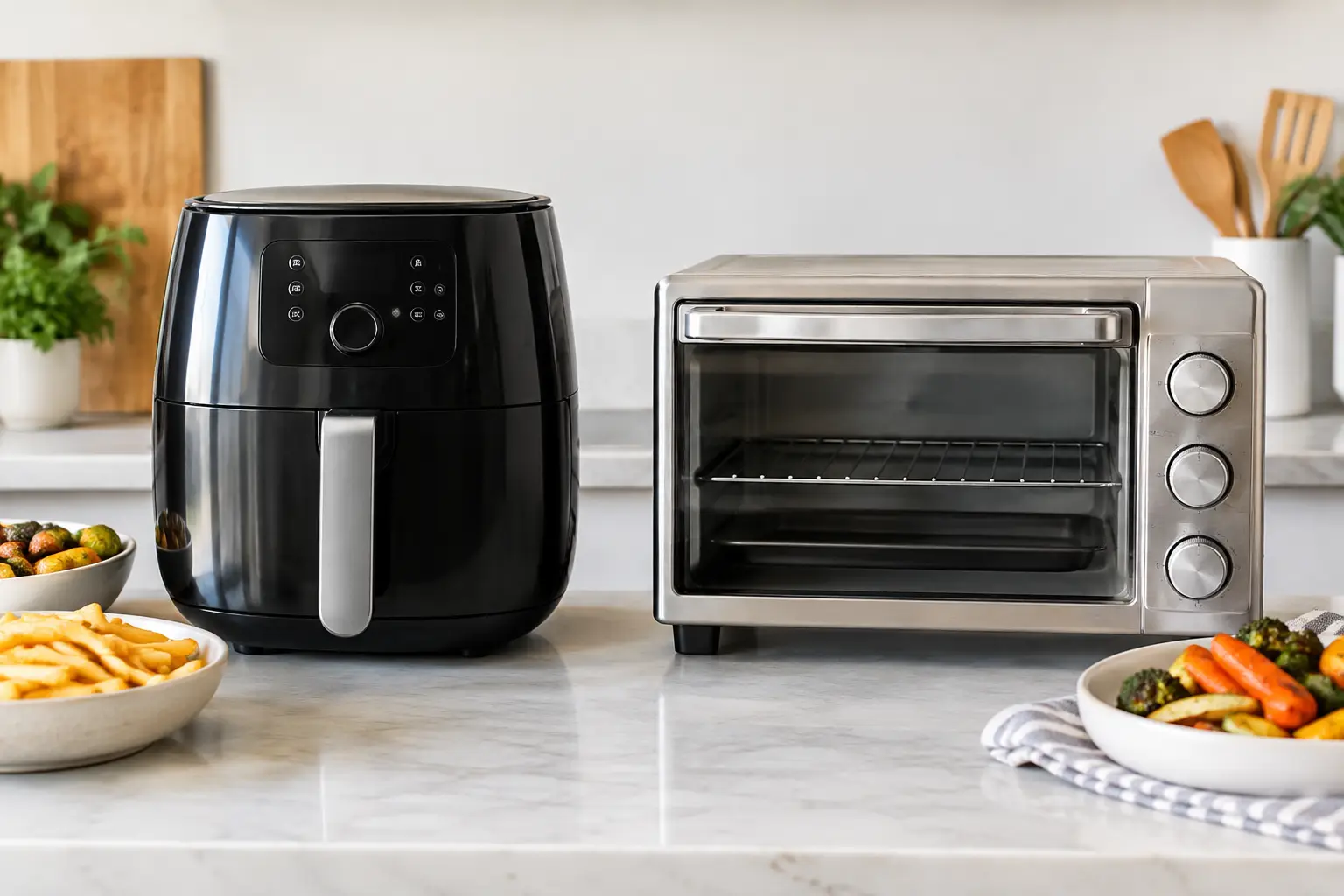
A countertop appliance earns its place when it makes a weeknight dinner feel less like a compromise. In the air fryer versus toaster oven decision, the better choice is not necessarily the trendier one. It is the appliance that matches how you actually cook: a quick salmon fillet for one, a tray of roasted vegetables for the family, or a golden, reheated slice of pizza that still tastes like dinner.
Both can bring more speed, style, and flexibility to a modern kitchen. Yet their strengths are distinctly different. An air fryer prioritizes intense circulating heat and crisp results in a compact footprint. A toaster oven offers a roomier, more versatile alternative to the full-size oven. The right fit comes down to capacity, texture, counter space, and the kind of everyday convenience you want.
Air Fryer Versus Toaster Oven: The Core Difference
An air fryer is essentially a compact convection oven designed to move very hot air rapidly around food. That powerful circulation is why fries, chicken wings, breaded shrimp, and Brussels sprouts develop a crisp exterior with little oil. Its small cooking chamber also heats quickly, which can make it an appealing choice for fast lunches, solo dinners, and snack-sized portions.
A toaster oven uses heating elements above and below the food, and many current models also include convection settings. It can toast, bake, broil, reheat, and roast in a broader, flatter cooking area. Rather than concentrating on a basket of crisp bites, it handles the familiar shapes of everyday cooking: toast, open-faced sandwiches, small casseroles, cookies, fish fillets, and a personal pizza.
The distinction matters because “air fry” is a cooking result, while a toaster oven is often a cooking station. Some premium toaster ovens include a dedicated air-fry mode, narrowing the gap considerably. Still, a standalone air fryer generally circulates air more aggressively, while a toaster oven gives you more room and more ways to use that room.
When an Air Fryer Feels Like the Better Upgrade
Choose an air fryer when crisp texture is a priority and you cook in smaller batches. It is exceptionally good at turning frozen foods into something that tastes less processed, reviving leftovers without the softness that comes from a microwave, and creating roasted vegetables with browned edges and tender centers.
Its compact size is part of the appeal. Apartment kitchens, dorm-style setups, RVs, and homes where counter space is carefully curated can benefit from an appliance that delivers a lot without claiming an entire prep zone. A basket-style air fryer is usually intuitive as well: preheat briefly, arrange the food in a single layer, shake or turn midway, and serve.
There is also an efficiency advantage for small portions. Heating a compact chamber instead of a full-size oven can reduce both wait time and unnecessary energy use. For someone who regularly makes a couple of chicken thighs, a batch of sweet potato fries, or a quick breakfast of crisped potatoes, that difference becomes meaningful over a busy week.
The trade-off is capacity. Air fryer baskets can crowd quickly, and crowding prevents hot air from reaching every surface. If you are feeding four people, you may need multiple rounds. That is manageable for appetizers, but less elegant when the main course and side dish need to land on the table together.
When a Toaster Oven Makes More Sense
A toaster oven is the stronger choice for cooks who want a countertop appliance to take on more of their oven’s workload. It accommodates bakeware, sheet-pan meals, slices of bread, and wider portions that simply do not fit comfortably in a basket. A toaster oven can prepare dinner, not just components of dinner.
Think of its best uses: baking a small pan of baked feta pasta, broiling a glazed salmon fillet, warming tortillas, toasting bagels, or roasting vegetables alongside sausages. The horizontal layout offers more control over placement, and the glass door lets you keep an eye on browning without interrupting the cooking cycle.
For families and frequent hosts, that flexibility has real value. A toaster oven can keep side dishes warm when the main oven is occupied, handle breakfast without firing up a large appliance, and bake a small batch of cookies when you want fresh dessert without excess heat in the kitchen.
Its limitations are mostly about speed and texture. It will usually take longer to preheat than an air fryer, particularly if it has a larger interior. Basic models may also not achieve the same crisp finish on wings or fries. A convection toaster oven improves that performance, but it may still require a little more cooking time and attention than a dedicated air fryer.
Capacity, Counter Space, and Cleanup
The most polished kitchen purchases solve a practical problem without introducing a new one. Before choosing, measure your counter space and consider where the appliance will live. An air fryer may have a smaller footprint, but it needs breathing room around the vents and enough clearance above it to pull out the basket. A toaster oven is wider and can dominate a narrow counter, though its low profile may fit neatly beneath cabinets if the manufacturer’s clearance guidance allows it.
Capacity should be judged by your usual meals, not the occasional holiday gathering. A two-person household that wants crispy vegetables and easy protein will likely appreciate a medium air fryer. A household that regularly makes toast at breakfast, reheats leftovers at lunch, and prepares dinner for three or four may get more daily use from a toaster oven.
Cleanup is another quiet deciding factor. Air fryer baskets and crisper plates are often removable and may be dishwasher-safe, but sticky marinades can collect in corners and around the grate. Toaster ovens typically require wiping the interior and emptying a crumb tray. They are easy enough to maintain when cleaned promptly, but baked-on cheese or splattered sauces demand more care.
Texture and Cooking Performance
If your ideal result is audibly crisp, the air fryer has the edge. Its rapid airflow excels with breaded foods, potato-based sides, chicken skin, and vegetables that benefit from caramelized edges. Use a light coating of oil rather than saturating the food, and leave space between pieces. The difference between a crowded basket and a single layer is often the difference between browned and merely warmed.
A toaster oven offers more balanced versatility. It can brown, bake, and broil with finesse, especially when a recipe needs a dish rather than a basket. It is better suited to melting cheese evenly across a flatbread, baking a small casserole, or crisping the top of a dish while keeping the center tender.
For baking, a toaster oven is usually the more dependable option. Cakes, muffins, cookies, and delicate pastries benefit from its bake setting and rack positions. Air fryers can bake small items, but their strong airflow can brown tops too quickly or shift lightweight parchment and ingredients. That does not make them unsuitable, only more specialized.
Is an Air-Fry Toaster Oven the Best of Both?
An air-fry toaster oven can be an excellent premium compromise, especially for people who want one sophisticated appliance rather than several. These models combine toast, bake, roast, broil, and convection-style air frying in a single unit. They work particularly well for households that value versatility, visual design, and a cleaner countertop setup.
There are compromises here, too. Combination units tend to be larger and more expensive than basic air fryers, and their air-fry function may not be quite as fast or forceful as a dedicated basket model. They also need a larger counter commitment. But if you want to toast sourdough in the morning, roast asparagus at night, and make crisp chicken tenders on weekends, the versatility can justify the space.
How to Choose With Confidence
Choose an air fryer if you mostly cook for one or two people, prioritize crispness, and want rapid results with minimal preheating. It is a smart, high-impact addition for compact kitchens and fast routines.
Choose a toaster oven if you want to replace frequent use of your full-size oven, cook flatter or larger foods, bake occasionally, and serve multiple people from one batch. It is the more adaptable countertop companion for a kitchen that handles several meals and moments each day.
Choose an air-fry toaster oven if you want one refined appliance that can cover the widest range of tasks and have the counter space to support it. Focus on interior dimensions, rack positions, controls, and cleaning design rather than relying on the word “air fry” alone.
The most satisfying choice is the one you will reach for on an ordinary Tuesday. Picture that meal, measure the space it requires, and select the appliance that makes home cooking feel more effortless, more beautiful, and worth repeating.













Leave a comment