
Bar Stools Versus Counter Stools for Your Kitchen
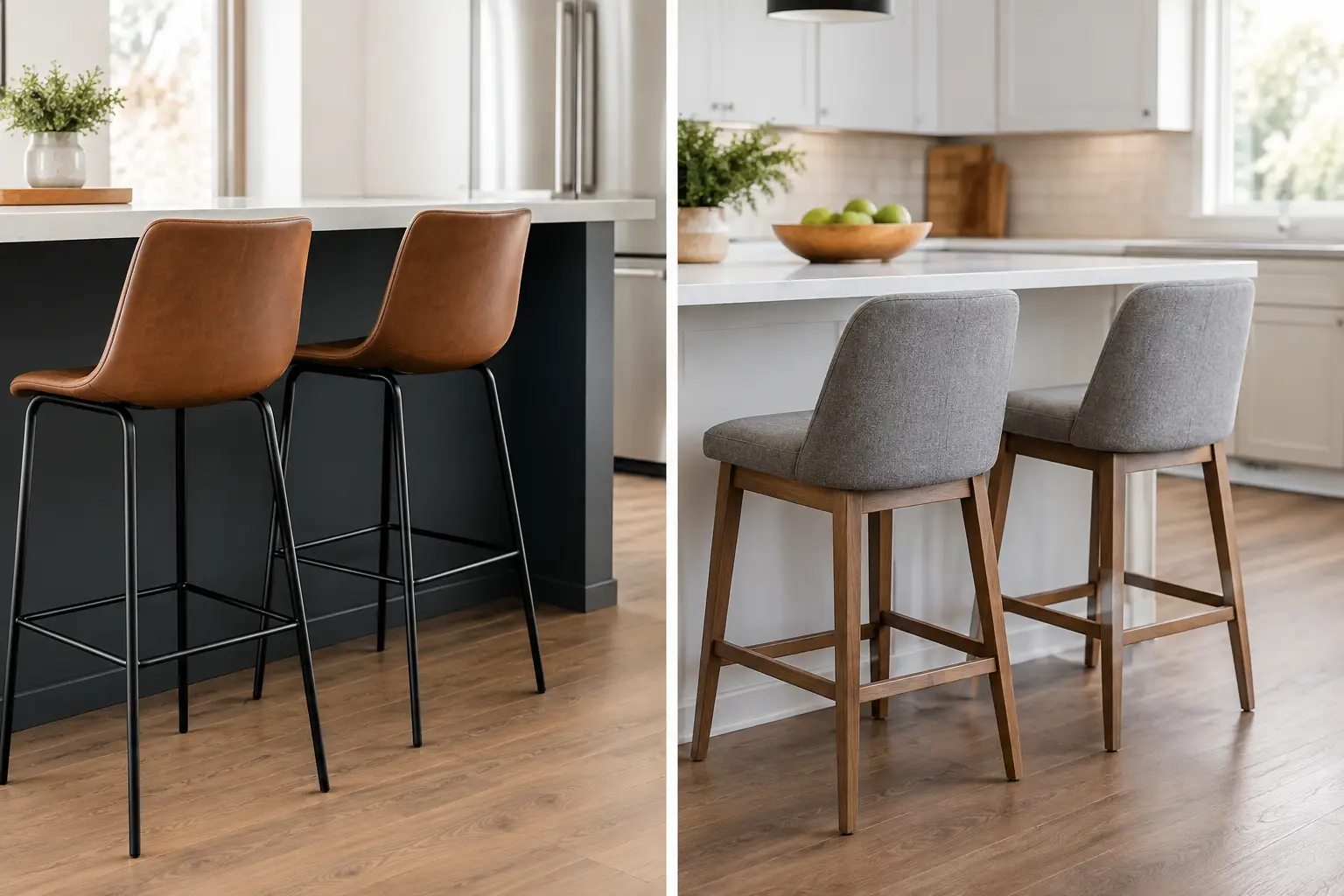
A beautiful island can lose its polish fast when the seating is wrong. Stools that sit too low make a thoughtfully designed countertop feel awkward; stools that sit too high leave guests cramped and discourage lingering over coffee, cocktails, or a weeknight meal. The decision between bar stools versus counter stools is primarily about inches, but it also shapes comfort, visual balance, and how your kitchen or entertaining space feels every day.
The good news is that choosing correctly is straightforward once you measure the surface you are seating beneath. From there, material, back height, and silhouette help you create a space that feels tailored rather than simply furnished.
Bar Stools Versus Counter Stools: The Essential Difference
The distinction is seat height, not the style of stool. Counter stools generally have a seat height of 24 to 27 inches and are designed for counters that stand about 34 to 39 inches high. This is the standard range for most kitchen islands, peninsula counters, and built-in breakfast bars in US homes.
Bar stools typically have a seat height of 28 to 32 inches. They belong at surfaces that measure approximately 40 to 43 inches high, such as a raised home bar, pub table, or taller two-level island.
A reliable rule is to leave 9 to 12 inches between the top of the seat and the underside of the counter. That gap gives knees and legs enough room to move comfortably without making diners feel disconnected from the surface. For most spaces, 10 inches is the sweet spot.
This is why labels alone are not enough. A retailer may call a piece a “counter-height stool,” yet its actual seat height can be 27 inches. Another may be labeled a bar stool but sit at 29 inches. Always use the product’s listed seat measurement and compare it to your own countertop height.
Measure Before You Fall for the Design
Start at the floor and measure straight up to the underside of your countertop or bar overhang. If your countertop is 36 inches tall, a 25- or 26-inch seat will usually feel right. If the surface is 42 inches high, look for a 30-inch seat.
Measure the underside rather than the top of a thick countertop when possible. Stone, butcher block, and waterfall-edge counters can add enough thickness to change your available knee clearance. If there is decorative trim, a support rail, or a deep apron under the overhang, account for that too.
Adjustable-height stools can be an elegant solution for spaces that serve more than one purpose or households with varying preferences. They are especially practical at a raised bar or in loft-style homes where industrial details and flexible furnishings work naturally together. Still, adjustable models need a stable base and a quality mechanism. The convenience is worthwhile only if the stool remains comfortable and secure at the height you use most.
Do Not Forget the Overhang
A stool can be perfectly sized and still feel inconvenient if the counter does not provide enough overhang. For comfortable seating, aim for an overhang of roughly 12 inches, though 15 inches offers more generous legroom. Shallower overhangs may work for a quick perch, but they are less inviting for long meals, homework sessions, or relaxed entertaining.
This detail matters in compact kitchens. If your island has limited projection, choose a streamlined stool with a smaller footprint and no arms. It will tuck in more cleanly and preserve the room’s easy circulation.
Choose the Right Number of Stools
Spacing is what gives a seating area its refined, intentional appearance. Plan for about 24 to 26 inches from the center of one stool to the center of the next. Wider stools, upholstered seats, and styles with arms may need 28 to 30 inches each.
For example, a 72-inch island often accommodates three slim, armless counter stools with ease. It may hold only two generously proportioned upholstered stools, and that is not a compromise. Two well-spaced seats can look more luxurious and feel far more comfortable than three crowded together.
Leave enough room at each end of the island as well. A stool pushed against a cabinet, wall, or appliance can make the whole arrangement feel compressed. In an open-plan room, pull-out clearance is equally important. Consider the traffic path behind seated guests, especially near refrigerators, doorways, and dining tables.
Comfort Depends on How You Use the Space
Height gets shoppers to the right category. Daily use determines the best design within it.
Backless stools are clean, compact, and easy to slide fully beneath an island. They suit minimalist kitchens, smaller apartments, and households that want the counter edge to remain visually open. A sculptural wood or metal backless stool can still bring plenty of character to the room.
Low-back stools offer a middle ground. They provide a little support and definition without interrupting the sightline across an island. They are a sophisticated choice for kitchens that open to a living room, where a row of high backs could visually divide the space.
Full-back stools are the most comfortable choice for leisurely breakfasts, laptop work, or hosting guests for a longer evening. Upholstered backs introduce softness, color, and a more furniture-like finish. They can make an island feel like a genuine gathering place rather than a surface with extra seats.
Arms add another layer of comfort, but they deserve careful measuring. Confirm that they fit beneath the counter and leave room to slide in and out. In a narrow kitchen, armless designs are usually the smarter, more graceful choice.
Footrests also make a noticeable difference. On a properly sized stool, the footrest should allow your feet to rest naturally rather than dangle. This is particularly valuable for children, shorter adults, and anyone spending more than a few minutes seated at the counter.
Match the Stool to the Room’s Materials
Once the proportions are right, let the stool contribute to the overall atmosphere. The strongest spaces balance coordinated finishes with a little contrast. Matching every surface too closely can make a kitchen feel flat, while one considered shift in texture or tone adds depth.
Warm wood stools soften white cabinetry, cool stone, and stainless appliances. They bring an organic, collected quality to transitional, Scandinavian-inspired, and modern farmhouse interiors. Look for sealed finishes in high-use kitchens, where splashes and fingerprints are part of real life.
Black metal or dark wood bases add definition to bright kitchens. They pair beautifully with matte black hardware, dark window frames, or dramatic pendants, but they can also serve as the room’s sole darker accent. For a more elevated effect, choose a slim profile instead of a bulky frame.
Upholstery brings immediate richness. Performance fabric in cream, taupe, charcoal, or a subtle woven texture feels polished while remaining practical for family spaces. Leather and leather-look finishes are equally compelling for a home bar or moody entertaining area, gaining character as the room becomes more lived in. If spills are frequent, prioritize wipeable surfaces or performance-rated textiles over delicate fabrics.
Swivel stools are worth considering when the seating faces an open room. They make conversation easier and reduce the need to drag a stool across the floor. A return-to-center swivel keeps the island looking orderly after everyone gets up, a small premium detail that makes a difference in a busy home.
When Standard Sizing Does Not Apply
Not every surface fits the standard categories. A 38-inch counter falls between conventional counter and bar height, while vintage furniture, custom islands, and outdoor kitchens can vary widely. In these cases, ignore the category name and work from the 9-to-12-inch clearance rule.
Also consider the people who will use the stools most. A household with young children may favor easy-clean upholstery, a stable four-leg base, and backs for support. A city apartment may benefit from light, tuckable silhouettes that keep a compact kitchen feeling open. For frequent entertaining, comfort and spacing may matter more than fitting in one additional seat.
If you are furnishing an outdoor bar, choose materials made for exposure to sun, moisture, and temperature shifts. Indoor stools can look exquisite on a patio for a season, but they rarely retain that finish without proper weather resistance.
A Better Way to Finish Your Island
The right stool should make your kitchen feel more usable before it makes it feel more styled. Measure the counter, protect the needed legroom, and choose a silhouette that supports the way you actually gather at home. Then let texture, finish, and upholstery bring the sophistication.
A well-proportioned set of stools turns the island into more than a place to set down groceries. It becomes the polished center of everyday rituals – the first coffee, the casual meal, the conversation that lasts longer than planned.









Leave a comment