
Digital Planners Versus Paper Planners
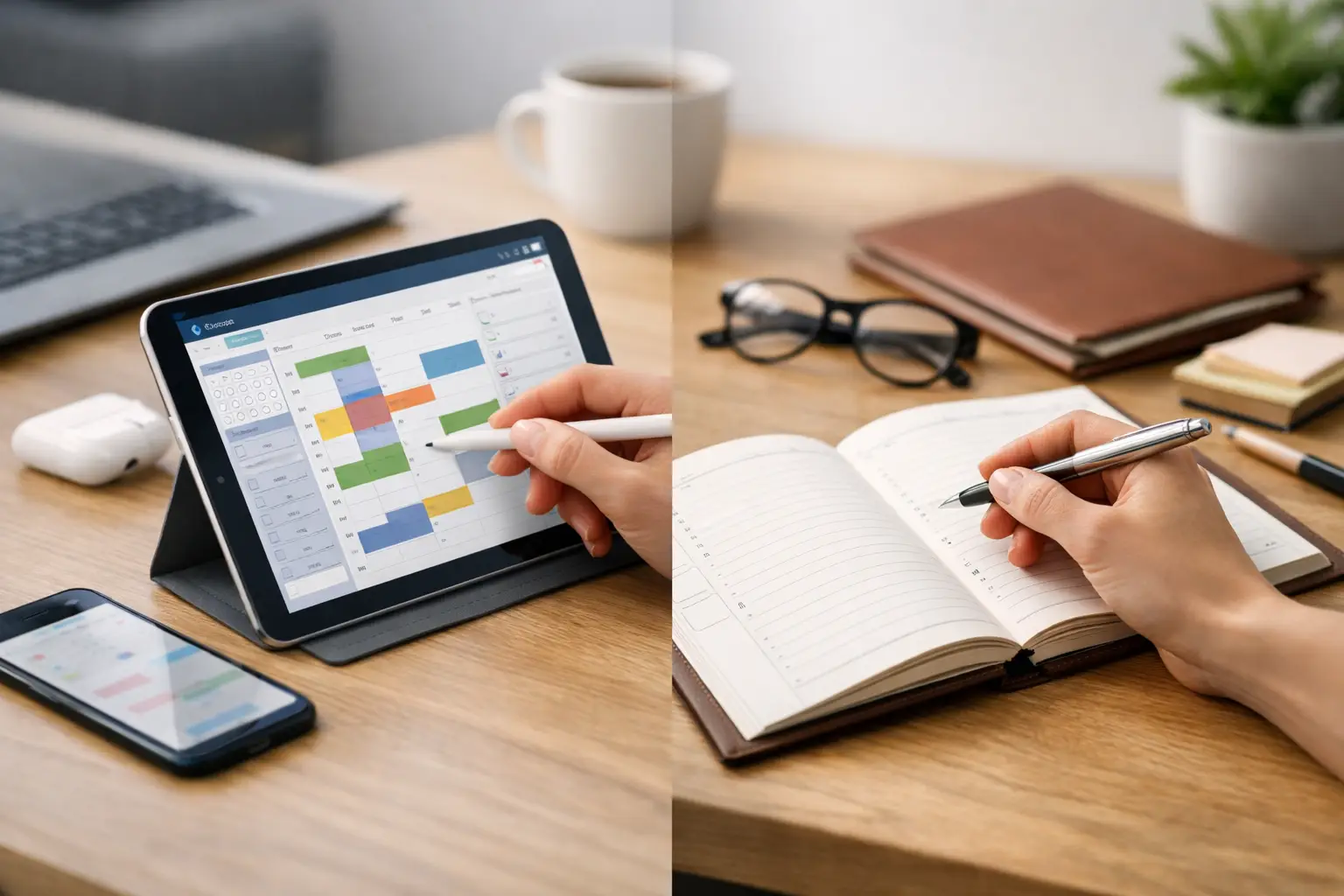
Some people want their schedule to live inside a beautifully designed tablet dashboard. Others want the feel of quality paper, a favorite pen, and a clean page waiting for the week ahead. When it comes to digital planners versus paper planners, the better choice is rarely about what is more modern. It is about what fits your pace, your aesthetic, and the way you naturally organize your life.
For a style-conscious shopper, this decision is not just functional. A planner becomes part of your daily environment, much like your workspace, tech accessories, or home essentials. The right option should feel polished, easy to use, and aligned with how you actually move through the day.
Digital planners versus paper planners: what really changes?
At a glance, both formats do the same job. They hold appointments, goals, lists, reminders, and routines. The real difference is how they shape your attention.
A digital planner tends to centralize everything. Your calendar, notes, hyperlinks, recurring tasks, and even habit tracking can live in one place. For busy professionals, creators, students, or parents juggling multiple moving parts, that level of consolidation can feel premium in the truest sense. It cuts visual clutter and keeps your planning system portable.
A paper planner offers a different kind of luxury. It slows the process down. Writing by hand creates a natural pause, which can make priorities feel clearer and decisions more intentional. If your days already involve nonstop screens, a paper planner can bring a welcome sense of calm and control.
This is where many people get stuck. They assume digital means more efficient and paper means more charming. Sometimes that is true. Sometimes it is not.
Where digital planners stand out
Digital planners work best for people who want flexibility without carrying extra items. If your phone, tablet, or laptop is already part of your daily rhythm, adding your planner to that ecosystem is an easy upgrade.
One of the biggest advantages is adaptability. A digital planner can be edited without crossed-out sections or wasted pages. You can duplicate templates, move tasks, add links, store notes, and keep months of planning materials in a single device. That matters if your schedule changes often or your work includes layered projects.
Searchability is another major benefit. A paper planner asks you to remember where you wrote something. A digital planner often lets you search instantly, which is especially useful for meeting notes, content plans, shopping lists, travel details, or personal goals spread across many dates.
There is also a visual appeal to digital planning that resonates with design-minded users. Clean layouts, customizable covers, coordinated color palettes, and polished dashboards can make planning feel elevated rather than administrative. For many people, that level of presentation increases consistency because the tool feels more enjoyable to use.
That said, digital planning has trade-offs. Notifications, open tabs, email, and social apps all compete for your attention on the same device. A beautiful planner loses some of its power if you open it and get pulled into five other tasks. Battery life, app compatibility, and the learning curve of certain planning platforms can also become friction points.
Why paper planners still hold their ground
Paper planners remain popular for good reason. They are tactile, focused, and immediate. You open them, write, and think. No charging. No syncing. No software updates.
For many users, handwriting improves retention. If you are trying to remember appointments, clarify goals, or map out a week with more intention, the physical act of writing can help ideas stick. That is especially valuable for people who feel mentally overloaded by digital tools.
Paper also creates healthy boundaries. A planner on your desk does one job. It does not interrupt you with messages or tempt you into checking notifications. That simplicity can be a quiet advantage in a high-noise routine.
There is also the issue of ritual. A premium paper planner can feel like a personal object, not just a utility. The cover texture, the paper weight, the layout, the quality of the pen on the page – all of it contributes to the experience. For people who appreciate craftsmanship and a refined daily setup, that sensory detail matters more than productivity advice usually admits.
Still, paper planners are less forgiving. If your plans change constantly, rewriting pages can get messy. You cannot search for old notes in seconds. You cannot back it up to the cloud. And if you leave it at home, your planning system stays there.
Choosing based on lifestyle, not trend
The smartest way to decide between digital planners versus paper planners is to look at your daily patterns, not influencer aesthetics.
If you travel often, manage family logistics, work across devices, or want one portable hub for schedules and notes, digital planning usually makes more sense. It suits fast-moving routines where convenience and flexibility matter most.
If you crave focus, enjoy analog rituals, or want planning to feel more grounded and less screen-based, paper often delivers a better experience. It suits people who want their planner to function as a calm anchor in the day.
There is also a practical middle ground. Many people use digital planning for appointments and logistics, then use paper for weekly priorities, journaling, or goal setting. This hybrid approach works well when you want the convenience of tech without giving up the clarity of handwriting.
That mix can be especially effective for modern households and ambitious professionals. Your shared schedule may belong on a device, while your personal planning habits may thrive on paper. One handles coordination. The other supports reflection.
Cost, value, and the premium question
Price matters, but value matters more.
A paper planner can be affordable or highly elevated depending on materials, design, and brand. Once purchased, it is simple. You may add pens, stickers, tabs, or accessories, but the basic investment is clear and finite.
Digital planners can look inexpensive at first, especially if you buy a downloadable template. But the true cost depends on the device and apps required to use it well. If you already own a tablet and stylus, the value is often excellent. If not, digital planning can become a much bigger investment.
That does not make one better than the other. It simply means the premium experience looks different in each category. With paper, quality shows up in materials and layout. With digital, it shows up in convenience, customization, and portability.
For shoppers who care about both aesthetics and function, the best value is usually the planner you will keep using for months, not the one that looked impressive for a week.
The emotional side of planning
Planning tools are rarely neutral. They shape mood, momentum, and even identity.
A digital planner can make you feel streamlined, current, and in control. It supports a polished, efficient lifestyle where everything has a place. For tech-forward users, that feels natural.
A paper planner can make you feel grounded, creative, and intentional. It turns planning into a private routine rather than another screen-based task. For many people, that feels more luxurious than automation.
This emotional fit matters. If a system feels like a chore, you will eventually stop using it. If it feels elegant, intuitive, and aligned with your life, consistency gets much easier.
That is why the right choice is often less about features and more about friction. Which format makes it easiest for you to return to your plans every day? Which one fits your environment, your schedule, and your personal style without asking you to become someone else?
So which planner should you buy?
If your life runs through devices and you want speed, editability, and all-in-one convenience, choose digital. If you want focus, tactile satisfaction, and a more deliberate planning ritual, choose paper.
If you love both, use both with intention. Let each format do the job it does best.
At Bluurban, that is the more refined way to shop and organize: not by chasing the trendiest format, but by choosing the one that elevates your routine and earns a place in it. The best planner is the one that brings a little more clarity, a little more order, and a little more ease to the life you are building.










Leave a comment